
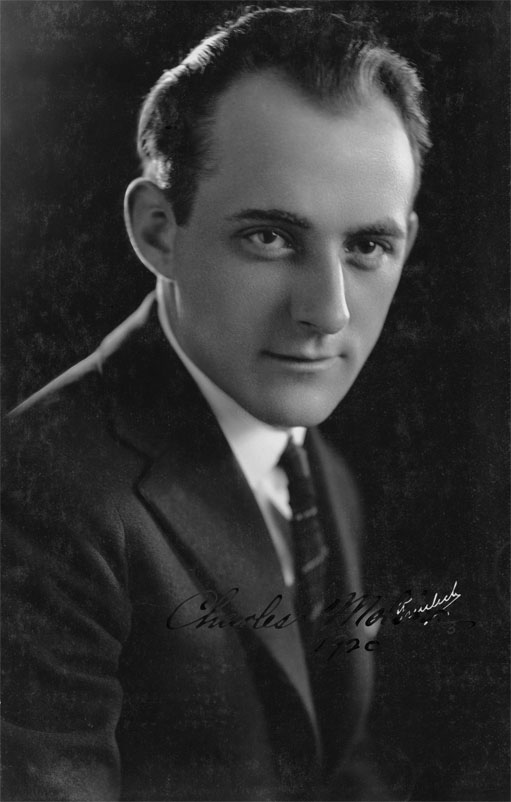
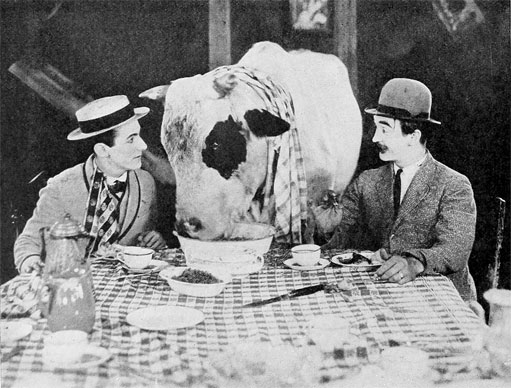
William Molina's enduring fascination with Hollywood cinema can be traced back to the 1920s, when his grandfather, under the screen name Charles Molina starred in pioneering silent films. Regrettably, numerous of those cellulose nitrate films, dating back a century, have deteriorated and decomposed permanently, resulting in their loss forever. Photo credit: The Hollywood Museum Collection, Margaret Herrick Library, Academy of Motion Picture Arts and Sciences.
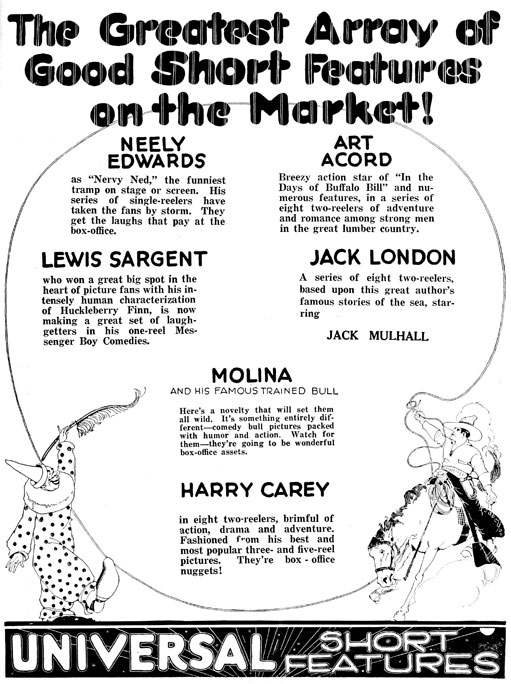
The only two known films starring Molina and his bull were "A Bully Pair", directed by Gilbert Pratt and produced and distributed by Universal. Gilbert Pratt was one of the great comedy directors working in the short comedy format during the late teens and twenties.
The first short film was released November 6, 1922. The second Universal one-reeler was "A Lot of Bull", which was released shortly thereafter November 13, 1922.
"Sources disagree as to whether this was a Universal Comedy or a Star Comedy. Trying to find information on comedy shorts of the silent era is often like trying to find the proverbial needle in the haystack,” recalls Academy of Motion Picture Arts and Sciences Archivist Samuel A. Gill.
Consequently, any information pertaining to these films is rather limited and sparse.
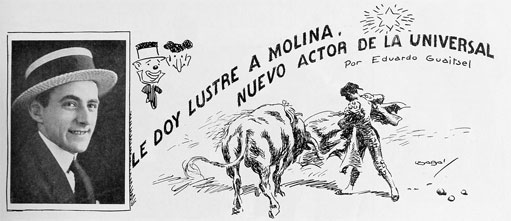
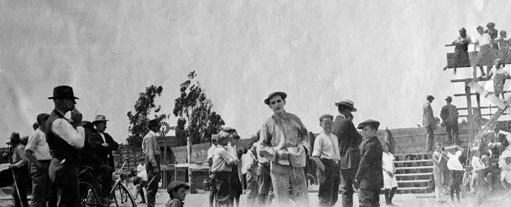
Archivist Samuel Gill recounts, "I have a feeling that "A Bully Pair", and perhaps even the hiring of your grandfather and his bull, was to capitalize on the tremendous success of the Paramount feature "Blood and Sand" starring Rudolph Valentino, which was released in August 1922. The comedy companies had a ball making spoofs of this film with its bullfighting theme, the most famous of which was Stan Laurel's "Mud and Sand". Notably the leading lady of "Mud and Sand", Julie Leonard also starred in "A Lot of Bull" along with Ruth Joyce.
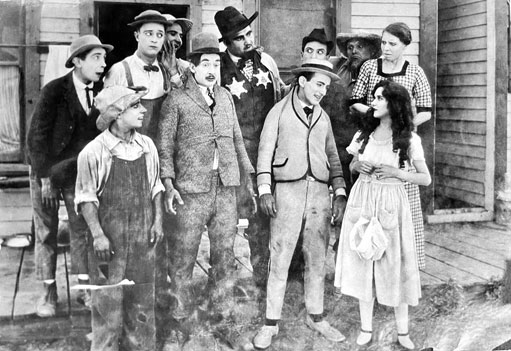
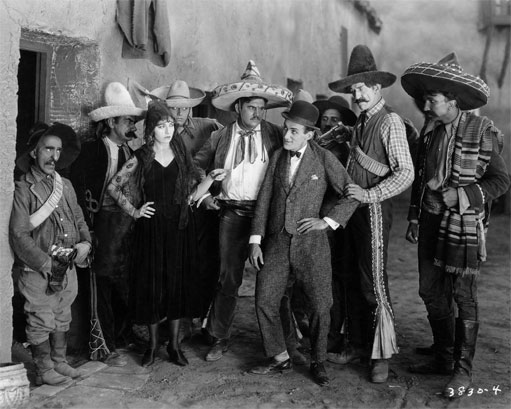
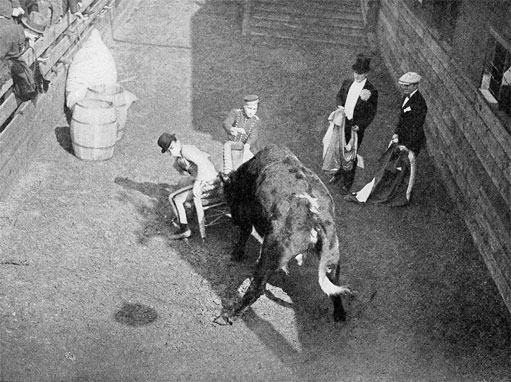
The surviving storyline of "A Lot of Bull": The scene of this swift comedy is laid in Mexico, a merry-go round's only rival for revolutions. Charlie, an auto salesman selling Detroit corn-poppers, falls in love with a senorita first clip out of the box. Her sweetheart, however, a big Mex., interferes and throws Charlie out into the street, then chases him. Charlie takes refuge in a barber shop, donning a beard. The Mex. comes in. He is the barber and starts to shaving Charlie, but discovers who he is. Charlie gets away in his flivver. He goes to a store and comes out dressed as a woman. He vamps several men and when one gets fresh knocks him down. His masquerade is discovered by another would-be lover. Things quiet down a bit and Charlie arranges for a demonstration of a flivver. The flivver blows up. The crowd chases Charlie, who gets away by taking refuge in the jail. He goes to sleep. Next day he goes to the bull fight. And is chased by the bull. Charlie protects himself with a mattress, narrowly misses being gored several times, as the toreadors and the crowd look on. With a broom he finally chases four bulls from the arena. (Universal Weekly, November 25, 1922) Photo credit: The Hollywood Museum Collection, Margaret Herrick Library, Academy of Motion Picture Arts and Sciences.
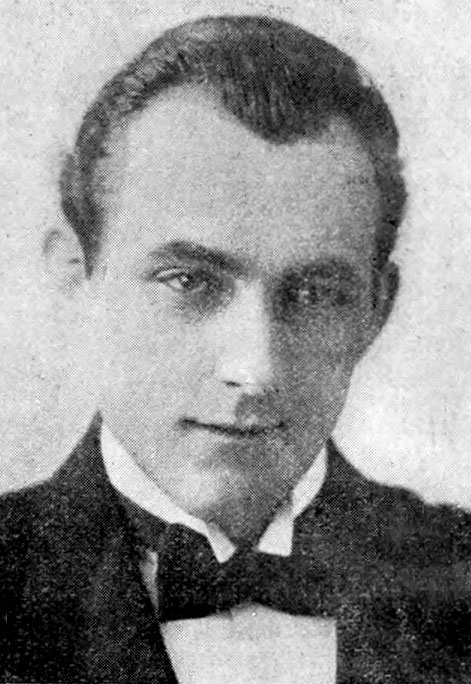
Unfortunately, there's not much about Molina's early silent films or Hollywood career. Except for the few Reviews, trade articles and periodicals, courtesy of the Media History Digital Library.
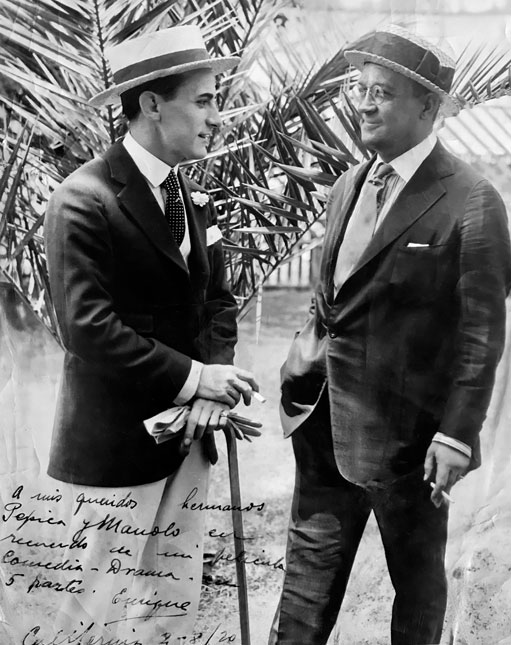
Eventually, Molina and his bull traveled thousands of miles to South America, supposedly had a signed contract to film four comedies in Buenos Aires. "As for this latest escapade... I think that if things go well, the Hollywood crowd will see that comedies can be made in those lands of the cheerful sun, too; and even if we don't make a single peseta, at least we'll see smiling faces—instead of just so many dollars. But what I fear is that if things go wrong, these adventurers will devour my bull in an American style BBQ. (De esta última travesura... me parece que si la cosa sale bien los Hollywootistas... van a ver que por aquellas tierras del sol alegre también se puede hacer comedias, y aunque no se gane una peseta por lo menos veremos las cara sonrientes... y no tantos dólares? Pero lo que temo es que si la cosa va mal, estos aventuristas se me comerán mi toro)."
Enrique Molina best summarized his journey, "What an adventure lies ahead—for all that will remain is the memory of the name for some Museum of the Americas or of Spain... but courage and heart... I am ready for whatever comes. (Vaya aventura que vamos a pasar, pues lo único que quedará será el recuerdo del nombre para algún Museo de América o de España... pero ánimos y valor... dispuesto a lo que venga)."
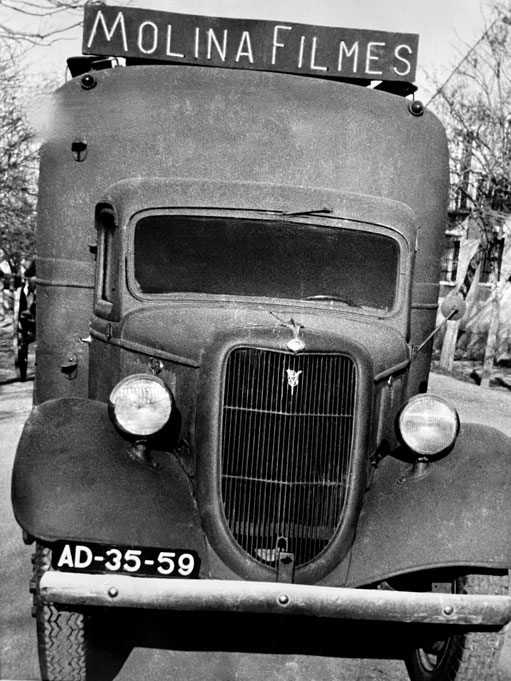
"Star or smashed (estrella o estrellado)" was Molina's motto about the entire episode. Somehow he would end up back in Europe (presumably Brussels) to establish a small production company, Molina Filmes (Portuguese for films). Once again, little is known about his film production endeavors or his numerous other ventures. However, the Spanish inventor and his family fled Europe during World War II, leaving everything behind.
Enrique and his family, English wife and three children (eventually four) including fifteen month old Edward (my father) were actually "barred" from entering England in January 1939.
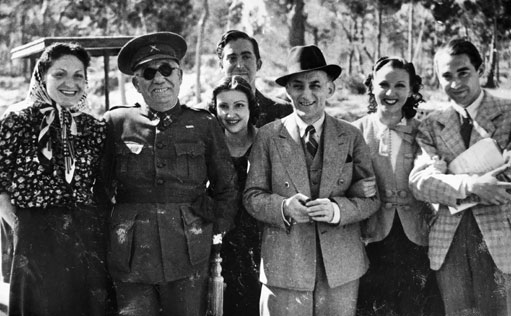
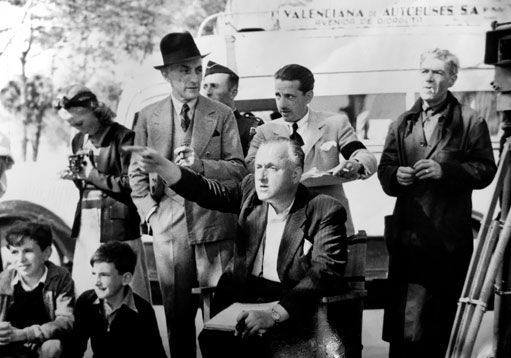
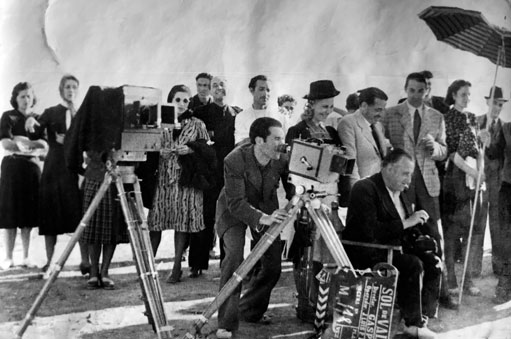
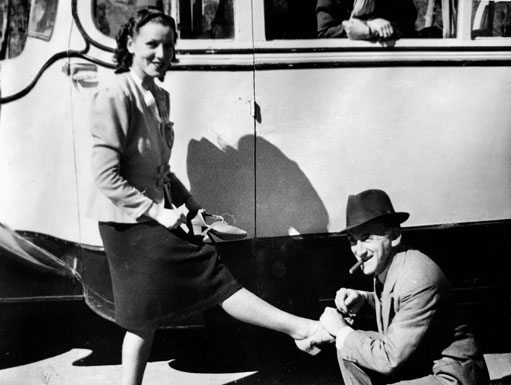
Twenty years after his days in Hollywood, Molina was apparently visiting an old amigo Jose Gaspar on the set of the Spanish film "Sol de Valencia" (1941). Enrique Molina can be spotted in the photos wearing his distinguished fedora hat. The child sitting below Molina is my uncle Jerry (my father's older brother). Of course Molina always found a way to trifle with the leading ladies, Maruja Gomez and Leonor Fabregas.


© 2020 WILLIAM H. MOLINA ALL RIGHTS RESERVED.
Material on this website is protected by copyright law.
Any unauthorized use or duplication is strictly prohibited unless prior written consent is obtained from William H. Molina.